
menu
Are you selling a machine—or asking an enterprise to reorganize itself around a new system of work?
Many robotics companies frame themselves as product innovators: better hardware, improved autonomy, more efficient performance. Yet adoption stalls, pilots linger, and enterprise rollouts fragment. The issue is rarely technical capability. It is the gap between how robotics companies position themselves and how enterprises evaluate risk, integration, and long-term operational impact.
This is not a messaging problem. It is a systems problem.
At Robo Success, we approach positioning through an adoption-first lens—helping robotics companies align how they present their offering with how enterprises actually make decisions under un
certainty.
Product-centric positioning assumes that value is self-evident. If the robot performs well, the market will respond.
Enterprise buyers operate differently.
They are not evaluating isolated performance. They are assessing:
This is why strong products fail to scale. Not because they lack capability, but because they introduce unresolved system-level questions.
A “product” implies a contained solution.A “platform” implies a system that others must trust, extend, and depend on.
The distinction is not semantic. It fundamentally changes how risk is perceived.
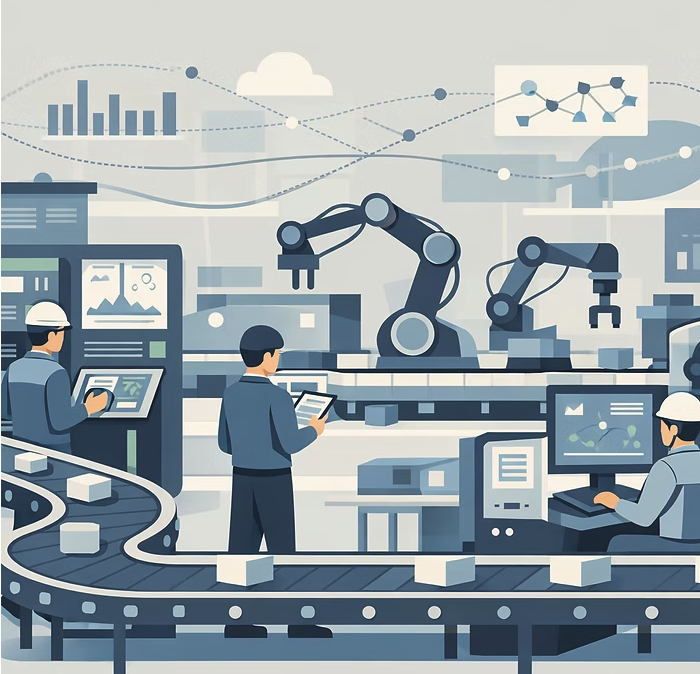
Enterprises do not adopt robotics incrementally—they absorb it systemically.
When a robotics company positions itself as a platform, it communicates three critical signals:
This aligns more closely with how enterprises evaluate long-term investments. Research on digital transformation consistently shows that organizations prioritize scalable systems over point solutions when operational risk is high, as outlined in McKinsey’s digital transformation insights.
A product answers: What does it do?A platform answers: How does this fit into everything else we already do?
Many robotics companies attempt to position as platforms prematurely.
They add APIs, dashboards, or ecosystem language—but the underlying experience remains product-centric.
This creates a credibility gap.
Enterprises quickly detect when:
Platform positioning is not a feature set. It is a commitment to reducing uncertainty across the entire lifecycle.
Without that, “platform” language increases perceived risk rather than reducing it.
To navigate this, robotics companies need a structured way to think about positioning beyond product features.
We use a four-layer Adoption Architecture to evaluate whether a company is truly operating as a platform.
This is where most companies focus:
Necessary, but insufficient. This layer earns initial interest, not adoption.
Here, enterprises assess:
This layer determines whether a pilot progresses or stalls.
Adoption depends on:
Insights from Harvard Business Review’s research on change management highlight that organizational alignment—not technology—is often the primary barrier to scaling innovation.
At this level, enterprises evaluate:
This is where platform positioning becomes decisive.
The core difference between product and platform positioning is not architecture—it is time.
Product positioning is short-horizon:
Platform positioning is long-horizon:
Enterprises default to longer time horizons because the cost of reversal is high.
A robot that fails can be removed.A system that fails creates organizational disruption.
This is why positioning must align with how risk compounds over time.
Most robotics companies struggle to position as platforms not because of external messaging, but internal fragmentation.
Without alignment, positioning becomes inconsistent—and enterprises interpret inconsistency as risk.
An effective robotics growth strategy must unify these perspectives into a single, coherent system narrative.
Platform positioning is not a marketing decision. It is an organizational alignment outcome.
Not every robotics company should position as a platform.
Product positioning is appropriate when:
In these scenarios, platform language adds unnecessary complexity.
The goal is not to force a platform narrative, but to match positioning with the enterprise’s risk model.
Platform positioning becomes critical when:
At this point, enterprises are no longer buying a tool. They are adopting a system.
Failing to position accordingly leads to stalled deals, extended pilots, and fragmented adoption.
The question is not whether your robotics company is a product or a platform.
It is whether your positioning reflects how enterprises evaluate risk, integration, and long-term impact.
Product-first positioning assumes performance drives adoption.Adoption-first positioning recognizes that trust, alignment, and system fit determine whether deployment scales.
At Robo Success, we work with robotics companies to bridge this gap—aligning how they build, position, and communicate so that enterprise adoption becomes a predictable outcome, not a prolonged negotiation.
If your growth is constrained not by capability, but by how your solution is perceived and adopted, it may be time to rethink the system behind your positioning.
Let's build something revolutionary - together