
menu
What if the biggest barrier to scaling a robotics company is not the technology, but the market's ability to understand it?Robotics companies often invest heavily in product development before addressing a more fundamental challenge: helping buyers understand why the technology matters to their operations. A capable robot can still struggle to gain traction when its value, implementation requirements, or practical applications remain unclear.This is why market education must precede expansion. At Robo Success, we view growth as a process of helping markets understand, evaluate, and adopt robotics, not simply increasing visibility for a product.
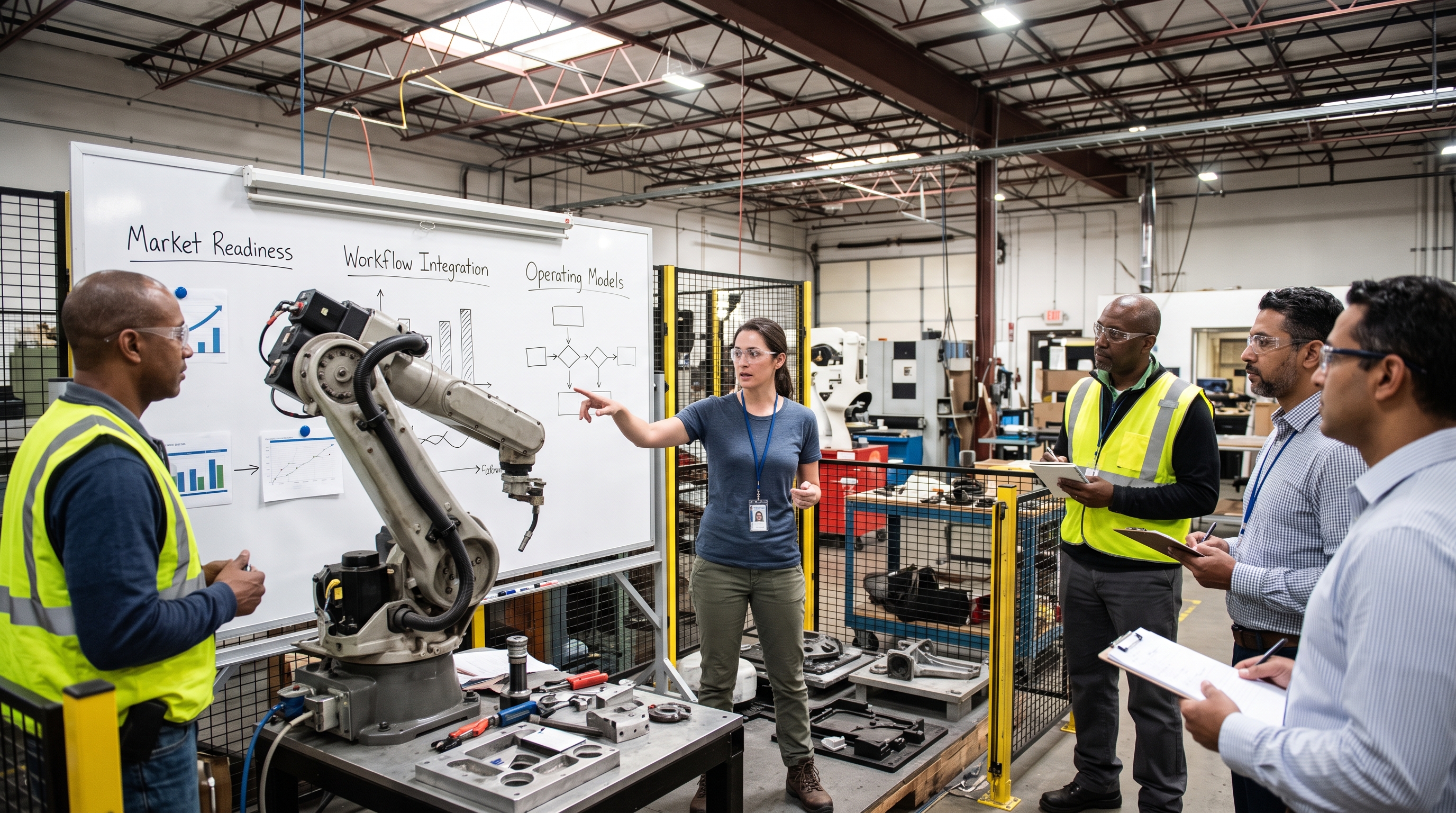
A successful demonstration proves that a robot can perform a task. It does not necessarily prove that a business should purchase it.Buyers need to understand the operational problem being solved, the alternatives available, and the conditions required for successful deployment. Without this context, even impressive technical capabilities can feel disconnected from business priorities.Market education bridges that gap by translating engineering achievements into outcomes buyers can evaluate, such as throughput, consistency, labor capacity, and operational flexibility.
Robotics purchasing decisions rarely belong to one person. Operations leaders may prioritize productivity, finance teams examine payback periods, IT teams assess integration, and safety managers evaluate workplace implications.A market education strategy addresses these different perspectives before they become obstacles to a purchase. It gives each stakeholder a clear understanding of the technology's role, limitations, implementation requirements, and expected value.This also helps robotics companies qualify demand more effectively. Buyers who understand what deployment requires are better prepared to evaluate whether a solution fits their environment.
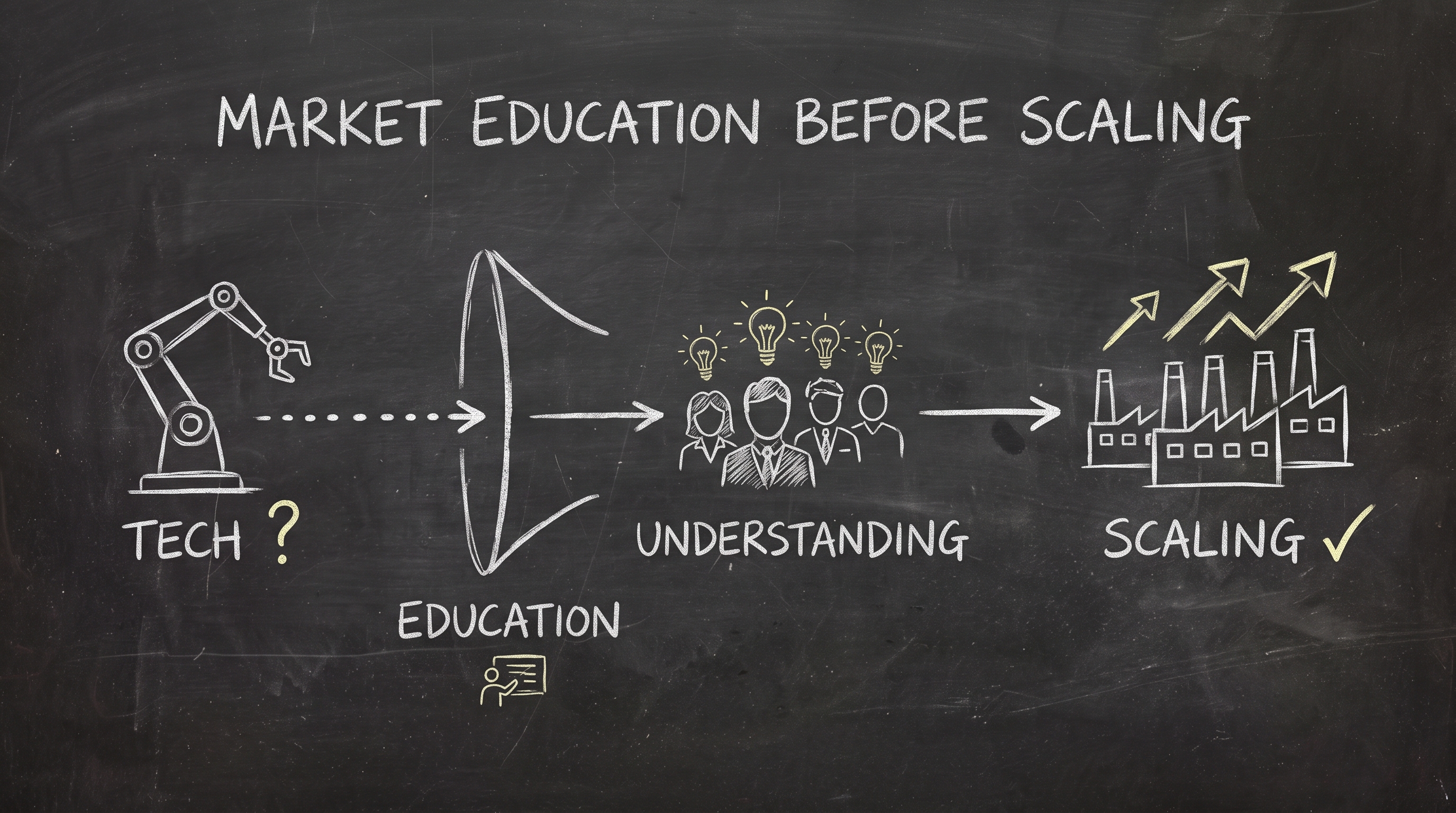
Emerging robotics markets often lack established expectations. Buyers may not know which applications are commercially viable, how solutions compare, or what capabilities are ready for deployment.Companies that explain these distinctions help shape how their category is understood. Rather than competing exclusively on technical specifications, they establish a clearer framework for evaluating the problem, the available approaches, and the value of their solution.This is particularly important when entering adjacent industries. A message that resonates with one customer segment may not translate directly to another, even when the underlying technology remains unchanged.
Research from the National Institute of Standards and Technology highlights how integration, performance measurement, interoperability, and validation affect manufacturers' ability to adopt robotics. These are not merely engineering concerns. They influence whether buyers can confidently justify an investment and prepare their operations for deployment. Similarly, Statistics Canada's research on robotics adoption identifies workforce skills and training among the challenges businesses face when adopting robotics technologies.
The strategic lesson is clear: market education must explain not only what a robot does, but also what successful implementation demands.
Before entering another market or increasing sales activity, robotics leaders should assess whether prospective buyers understand the problem, the solution's practical value, and the requirements for adoption.If those fundamentals remain unclear, additional promotion may generate attention without creating qualified demand. A focused education strategy can help identify knowledge gaps before they become expensive barriers to growth.
Market education should not depend on occasional product announcements or one-off demonstrations. It should become a consistent part of how a robotics company communicates with its market.
Technical explainers, deployment insights, customer evidence, industry-specific use cases, and implementation guidance can build a shared understanding over time. This aligns with NIST’s research on advancing robotics adoption, which highlights the need for tools and evaluation methods that help manufacturers assess and integrate emerging technologies. Sales, marketing, product, and customer success teams should reinforce the same core narrative while addressing different buyer concerns.
For companies preparing to scale, a strategic approach to robotics growth connects this education with positioning, demand generation, and commercial readiness.
Scaling a robotics company requires more than proving that the technology works. It requires helping the market understand where it fits, why it matters, and what successful adoption involves.Companies that invest in market education before expanding their commercial efforts can build a stronger foundation for sustainable demand. The goal is not simply to make more buyers aware of a robot, but to help the right buyers make informed decisions about adopting it.If your company is preparing to enter a new market or scale an existing solution, consider whether your market understands the value you are bringing. A clearer education strategy can be a valuable starting point for your next stage of growth.
It is a structured approach to helping potential buyers understand a robotics technology, its relevant applications, its limitations, and the requirements for successful adoption.
It helps startups turn technical interest into informed buying decisions, particularly when customers are unfamiliar with the technology or uncertain about implementation.
It prepares multiple stakeholders to evaluate business value, operational fit, integration requirements, and deployment risks, helping make complex purchasing decisions more informed.
Ideally, before scaling sales and marketing efforts, especially when entering a new category, targeting unfamiliar industries, or introducing a technology without established buying criteria.
Practical use cases, deployment evidence, technical explainers, integration guidance, customer outcomes, and transparent discussions of limitations can help buyers assess whether a solution fits their needs.
Let's build something revolutionary - together