
menu
Many robotics pilots prove the technology works. Far fewer prove the business is ready to scale it.A successful pilot is often celebrated as the finish line, yet enterprise buyers see it as the beginning of a much larger evaluation. They are not only validating a robot's technical performance. They are assessing operational fit, implementation risk, internal ownership, and long-term support. Companies that treat pilots as technical milestones often struggle to reach production deployments. At Robo Success, we view commercialization through an adoption-first lens. Scaling robotics requires more than a capable product. It requires building confidence across every stakeholder responsible for turning a promising pilot into an operational standard.
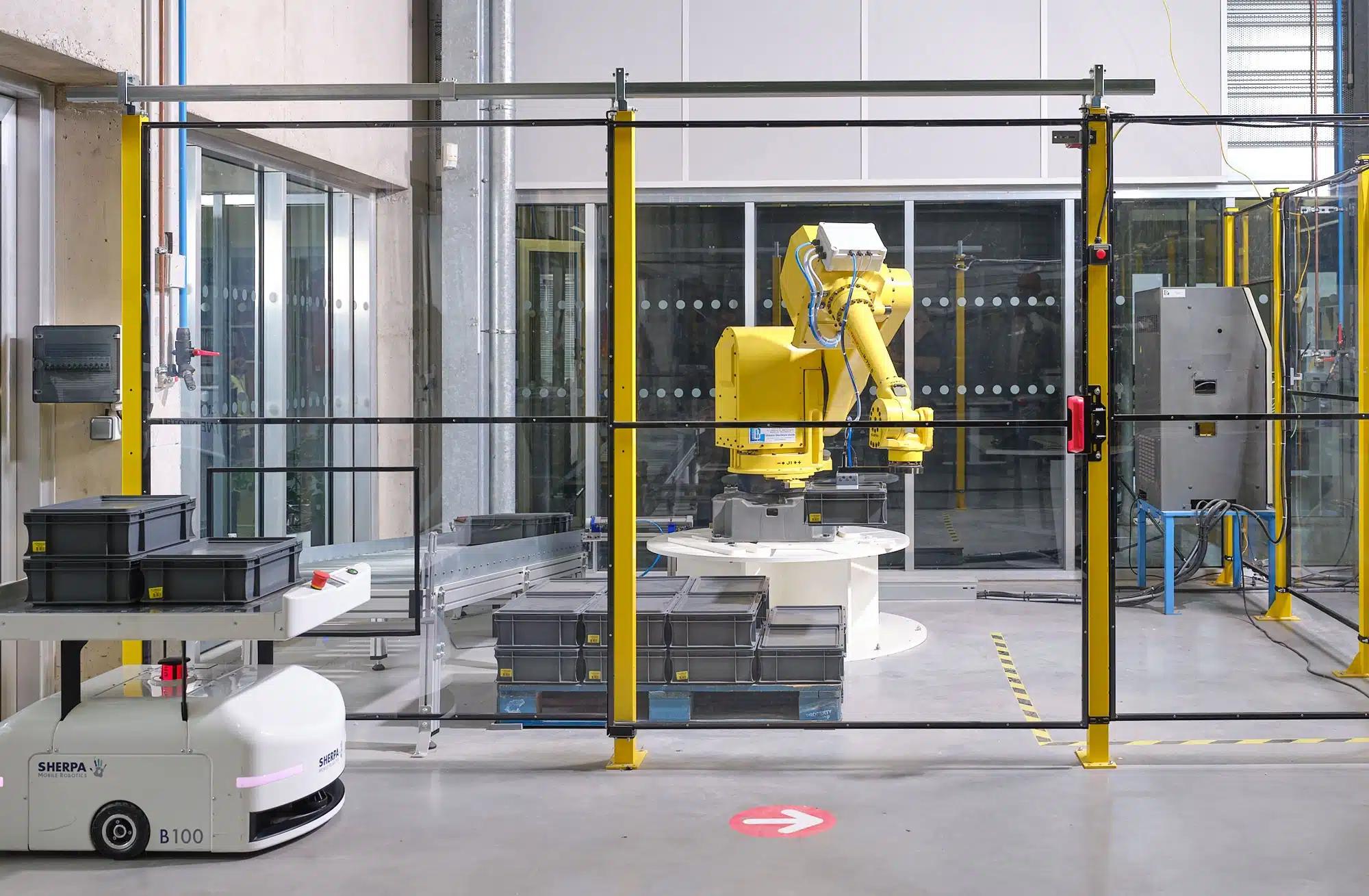
A pilot answers one question: Can the robot perform the intended task? A deployment answers several more.Can operations maintain it? Can IT integrate it? Can finance justify expanding it? Can leadership trust that performance will remain consistent across multiple facilities? Many robotics companies assume technical validation naturally leads to procurement. Enterprise buying rarely works that way. Every successful deployment requires organizational alignment alongside technical performance.
Enterprise buyers are accountable for business continuity. Even when a pilot produces positive results, expanding deployment introduces new variables including workforce training, systems integration, change management, maintenance planning, and operational accountability.The discussion quickly shifts from robot performance to organizational readiness.Companies that anticipate these conversations early tend to shorten adoption cycles because they reduce uncertainty before procurement teams have to ask.
A strategic checkpoint: If your pilots consistently succeed but deployments stall, it may be time to evaluate how your commercialization strategy addresses enterprise adoption rather than product performance alone.

Every deployment teaches valuable lessons. The most successful robotics companies convert those lessons into repeatable systems.Instead of treating each customer as a unique implementation, they standardize onboarding, documentation, success metrics, deployment playbooks, and customer education.Repeatability reduces implementation risk for both the vendor and the customer. It also gives buyers greater confidence that future deployments will deliver similar outcomes.
Research from McKinsey's analysis of robotics adoption highlights that many organizations remain stuck between successful pilots and scaled implementation because internal capabilities, integration complexity, and risk perception often outweigh technical performance. Likewise, the International Federation of Robotics notes that broader adoption depends not only on advances in AI but also on reliability, integration, and commercial readiness. These findings reinforce an important reality: scaling robotics is as much an organizational challenge as a technical one. (McKinsey & Company)
Enterprise customers rarely ask whether one robot can work. They ask whether one hundred can.That changes the evidence they need. Buyers look for deployment methodologies, customer success capabilities, measurable operational outcomes, and long-term support. These signals reduce perceived risk and make expansion decisions easier.The companies that prepare this evidence before customers request it often move from pilots to production faster.
Why do robotics pilots fail to scale?
Because technical success alone does not remove organizational, financial, and operational risks that influence enterprise purchasing decisions.
What do enterprise buyers evaluate after a successful pilot?
They assess integration, workforce impact, support capabilities, implementation processes, ROI, and confidence that results can be replicated across locations.
How can robotics companies improve deployment success?
By standardizing implementation, documenting outcomes, educating stakeholders, and reducing uncertainty throughout the buying journey.
Why is stakeholder alignment important in robotics?
Multiple departments influence deployment decisions. Success depends on addressing the priorities of operations, IT, finance, leadership, and frontline teams together.
What makes commercialization scalable?
Repeatable deployment systems, clear customer education, measurable business outcomes, and consistent post-sale execution.
Robotics companies do not scale by proving their technology once. They scale by making adoption predictable.
The strongest commercialization strategies recognize that every pilot is ultimately a trust-building exercise for a much larger deployment decision. Organizations that reduce operational uncertainty, build repeatable implementation systems, and communicate business value clearly are better positioned to move beyond isolated successes.
Learn more about effective robotics commercialization strategies and how adoption-first thinking helps robotics companies grow with confidence.
Let's build something revolutionary - together